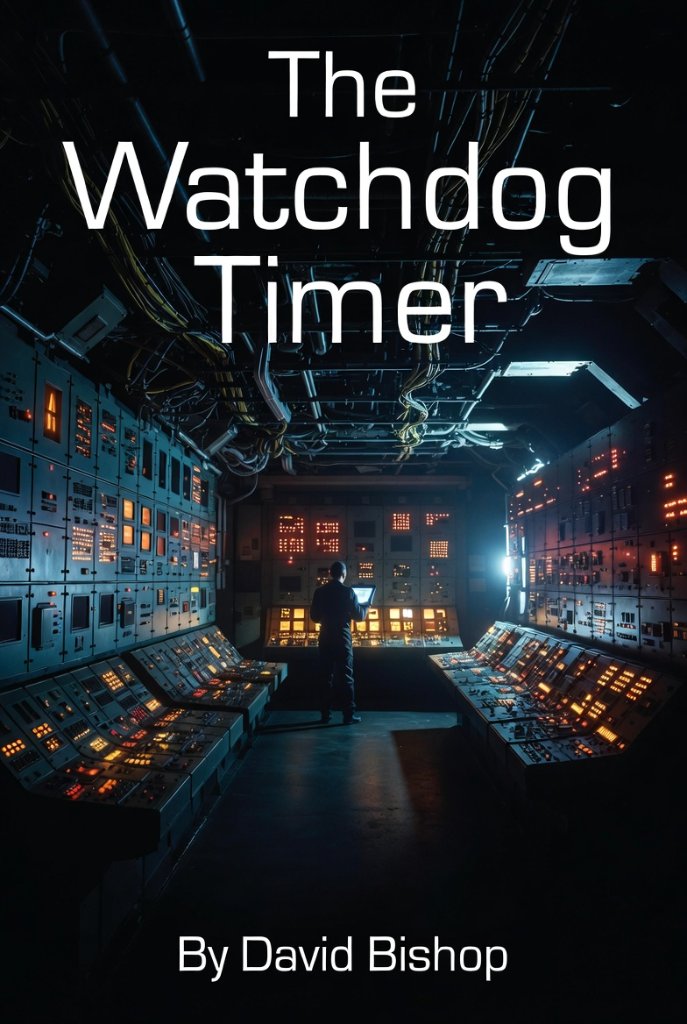
The Watchdog Timer: A Love Letter to Control Engineers
If you've ever stood in a control room at 2 AM trying to figure out why a PLC just faulted, this book is for you.
If you've ever explained to management why you can't "just reboot it," this book is for you.
If you've ever felt that unique blend of pride and exhaustion that comes from keeping critical systems running while the rest of the world sleeps—this book is definitely for you.
The Watchdog Timer isn't a thriller. It's not a novel. It's something I've never seen before in the automation world: a book that treats control and automation engineering as both a technical discipline and a deeply human experience.
Why This Book Exists
I've spent twenty years in this industry. I've programmed PLCs for pharmaceutical plants, designed SCADA systems, debugged ladder logic at ungodly hours, and mentored junior engineers who thought automation was going to be more glamorous than it is.
And in all that time, I've never found a book that captured what this work actually feels like.
There are plenty of technical manuals. Plenty of textbooks on control theory. But nothing that addresses the reality of the job: the troubleshooting at 3 AM, the political battles over system upgrades, the satisfaction of a well-tuned loop, the frustration of inherited code with no documentation, the weight of knowing that your work keeps people safe.
So I wrote it.
What's Actually In It
The Watchdog Timer is organized around the real experiences of automation work:
The Middle of the Night - We've all been there. The phone rings. Something's down. Production is stopped. You're the only one who can fix it. This section is about troubleshooting under pressure, the mental models that help you solve problems fast, and how to stay calm when everyone's panicking.
The Systems We Inherit - That PLC program written in 1997 by someone who retired ten years ago? The SCADA system held together with virtual duct tape? The undocumented modifications made by three different integrators? We all inherit these systems. This section is about making sense of chaos and improving what you can't replace.
The Human Element - Automation isn't just about machines. It's about operators who resist change, managers who don't understand why upgrades cost so much, vendors who overpromise, and the delicate balance between automation and human expertise. This section is about navigating the people side of the job.
The Craft - There's an art to good automation. Clean code. Thoughtful alarming. Systems that operators can actually use. Documentation that helps instead of obscures. This section is about doing the work well, not just getting it done.
The Watchdog Timer Metaphor
For those outside the automation world, a watchdog timer is a failsafe. It's a timer that resets continuously during normal operation. If the system freezes or fails, the timer expires, triggering a safety response.
It's a beautiful metaphor for what we do.
We're the watchdog. We keep systems running, we catch failures before they cascade, we reset the timer every day. And when we don't—when we miss something, when we're not there, when the system fails—there are consequences.
That responsibility weighs on you. This book acknowledges that weight.
What This Book Isn't
This isn't a technical manual. You won't find PID tuning formulas or ladder logic syntax guides.
This isn't a textbook. I'm not teaching you how to program a PLC (though I assume you already know).
This isn't a memoir. It's not about me. It's about us—the people who do this work.
Who This Book Is For
This book is for the control engineer who's ever felt invisible. The automation tech who keeps critical infrastructure running while nobody notices. The systems integrator trying to balance client demands with engineering reality. The junior engineer wondering if this career path was the right choice. The senior engineer wondering if anyone will remember what you built.
It's for anyone who's ever looked at a properly functioning automated system and thought: "That's beautiful."
A Personal Note
I wrote The Watchdog Timer because I love this work. Not in a romantic way—it's hard, frustrating, often thankless work. But there's something profound about being the person who keeps things running. About understanding complex systems. About solving problems that have real consequences.
There's dignity in this work. There's craftsmanship. There's a community of people who understand what it means to get a 3 AM call and just... go fix it.
This book is my attempt to honor that. To say: what we do matters. How we do it matters. And we're not alone in this.
The Title Explained
Someone asked me: "Why The Watchdog Timer? Why not something more accessible?"
Because this book isn't for everyone. It's for us.
If you know what a watchdog timer is, you're part of the tribe. You understand the metaphor instantly. You get why that particular piece of automation philosophy—the idea of a system that watches itself, that fails safely, that acknowledges the possibility of failure while working to prevent it—captures something essential about our work.
If you don't know what a watchdog timer is... well, maybe you'll learn. And maybe you'll understand why we find beauty in things like that.
In Closing
I don't know if this book will find a wide audience. That's not really the point.
The point is that somewhere, right now, there's a control engineer troubleshooting a system fault. There's an automation tech replacing a failed sensor. There's a programmer debugging inherited code. There's someone standing in a control room, keeping things running, doing work that matters.
This book is for them. For you. For us.
Because someone needed to write it.
And because we deserve to have our work seen, understood, and valued.
The Watchdog Timer is available now on Amazon and other major retailers.