There Are 15 Books in the Bible You've Never Read
There Are 15 Books in the Bible You've Never Read
Let me start with a fact that should stop you cold.
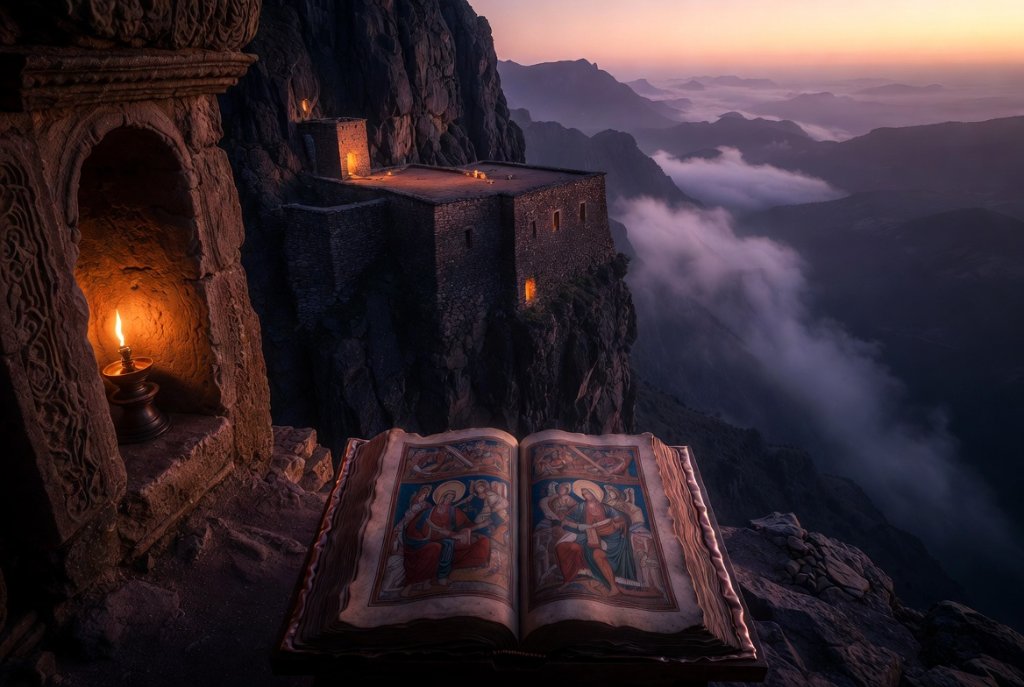
Somewhere in Ethiopia, on a mountaintop 7,000 feet above sea level, there is a monastery. Inside that monastery is the oldest illustrated Christian Bible on earth — carbon-dated to somewhere between 330 and 650 A.D. It sits in a room that most outsiders will never enter. The monks who guard it have been doing so for over 1,700 years.
That Bible has 81 books.
Yours has 66.
The Library Nobody Told You About
The Ethiopian Orthodox Tewahedo Church is not a small, obscure sect. It has 60 million members. It has been in continuous, unbroken operation since Acts 8 — when Philip baptized the Ethiopian official on the road to Gaza and Christianity arrived in East Africa before it reached most of Europe. The church was never conquered by Rome. It was never reorganized by the Reformation. It was never part of the Council of Trent.
It just kept reading.
For 2,000 years, while the Western church was arguing about what belonged in the canon, the Ethiopian church kept 15 texts that most Protestant Christians have never heard of. And here is what makes this more than an interesting historical footnote:
The New Testament quotes from these books. Directly. By name.
The Book Your New Testament Quotes
Jude 1:14-15 reads: "Enoch, the seventh from Adam, prophesied about them: 'See, the Lord is coming with thousands upon thousands of his holy ones to judge everyone.'"
That is a direct quote. Jude names his source. He is quoting the Book of 1 Enoch — a text preserved in Ethiopia and virtually nowhere else in the Christian world for over a thousand years.
2 Peter draws on the same Watcher narrative from 1 Enoch — the story of the fallen angels who took human wives, which is the backstory behind the Nephilim in Genesis 6. Fifteen copies of 1 Enoch were found among the Dead Sea Scrolls. The early church read it. Jesus's audience knew it.
And then Western Christianity lost it.
Except in Ethiopia.
The 400 Silent Years
Every Christian who has ever read the Bible has noticed it: Malachi ends, and then Matthew begins — and in between, 400 years pass with no explanation. Who are the Pharisees? Where did the Sadducees come from? What is the Sanhedrin? Why do the Jews hate the Romans and why do the Romans allow Jewish religious practice?
The Ethiopian Bible includes a book called Josippon that answers every one of those questions. Alexander the Great. Antiochus Epiphanes and the Maccabean revolt. The origin of every religious faction Jesus encountered. The infrastructure of Rome and why it mattered for the spread of the gospel.
The world the New Testament assumed its readers already knew — Josippon is where you find it.
The Resurrection Theology Paul Builds On
When Paul writes in 1 Corinthians 15 about the resurrection of the dead, he is not inventing a new theology. He is drawing on a tradition that had been developing for centuries — a tradition preserved in the Ethiopian martyrdom literature known as the Meqabyan books.
These are not the Greek books of Maccabees. They are completely different texts, unique to the Ethiopian tradition, that develop the theology of faithful death and bodily resurrection in ways the Hebrew Bible only hints at.
Paul's audience knew this background. Most modern Christians do not.
Why Does This Matter?
I want to be clear about something: I am not arguing that Protestant Christians are wrong to have a 66-book Bible. The canon decisions that produced it were made by serious, faithful people wrestling with genuine theological questions.
But those decisions were made in a specific historical moment, by people in a specific geographical location, with specific concerns. The Ethiopian church was never part of those conversations. It kept what it always had. And what it kept turns out to illuminate the New Testament in ways that have been largely invisible to Protestant readers for 500 years.
There are six specific gaps in Protestant theology that these texts address — gaps around the origin of evil, pre-Christ resurrection theology, the 400 silent years, corporate confession, church governance, and practical ethics in community. Chapter 23 of my new book walks through each one in detail.
But you do not need to take my word for it. The connections between these texts and the New Testament are not speculation. They are documented scholarship from scholars in every tradition. I just organized them in plain English, with no Greek required, for a reader who never went to seminary.
The Door Is Still Open
The monks are still on the mountain.
The library has always been there. It was never burned, never banned, never lost. It was just kept somewhere most of us were never told to look.
What Your Bible Left Out: The Books Ethiopia Kept for 2,000 Years — and What They Teach Every Christian is coming soon. It is 112,984 words across 25 chapters, a Foreword through Epilogue, and five appendices including a complete four-way canon comparison of the Protestant, Catholic, Eastern Orthodox, and Ethiopian Bibles.
No Greek. No Hebrew. No seminary required.
Just the full library — finally opened.